
In the article
we learned that the factor limiting the motor power to 1300W instead of 1500W is the revolutionary Avinox FP700 battery

which uses Ampace cells

that have a lower internal resistance and can provide over 40A at 36V without a significant voltage drop, without overheating, and deliver the promised 1500W.
Atherton adopted these FP700 batteries because other types of batteries simply cannot fit in the bike's cylindrical tube.
The question remains: why don't other bike manufacturers adopt these batteries?
Since Atherton has adopted them, it means they are available and can be purchased, integrated.
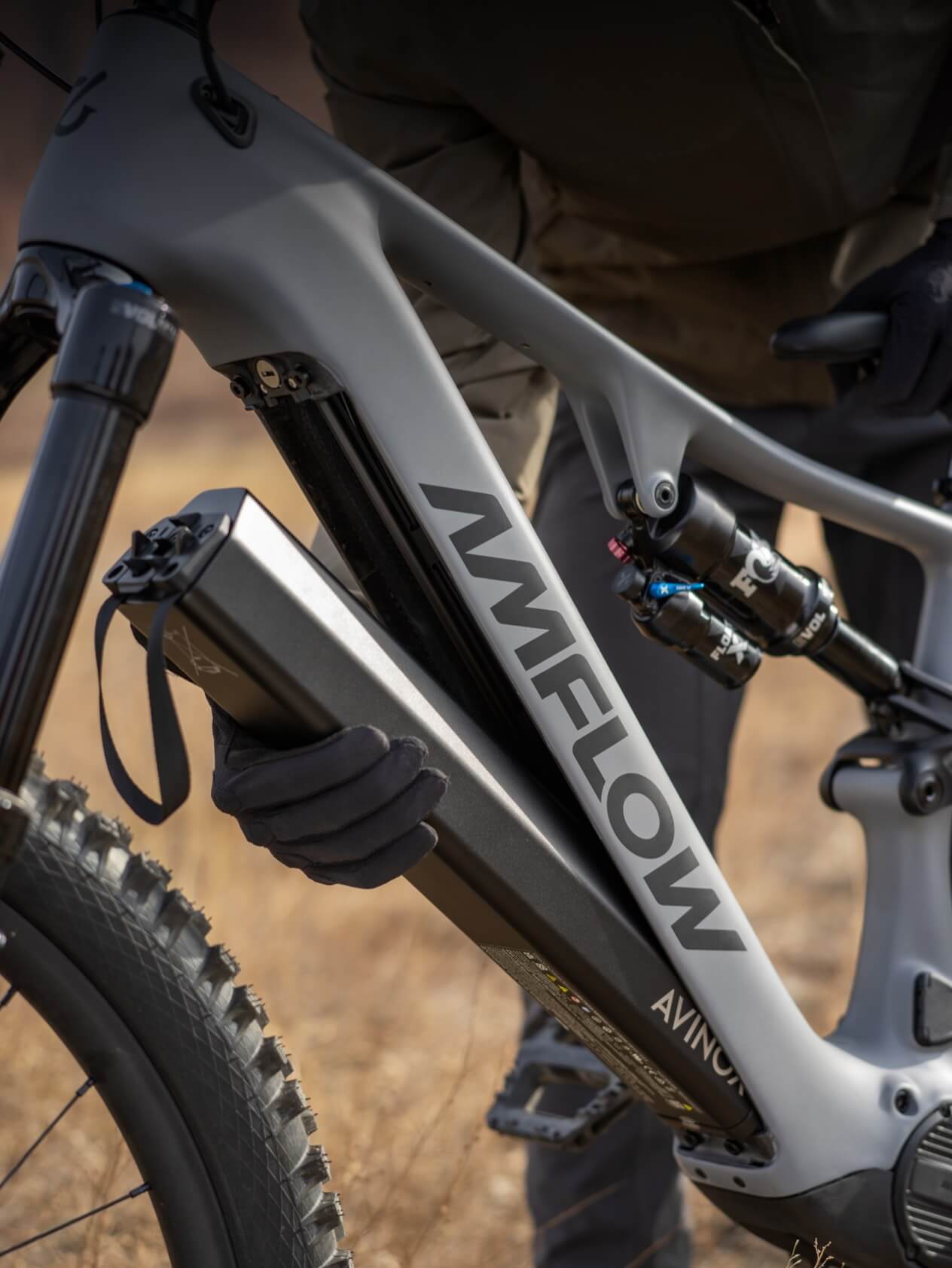
Looking at the models Amflow PR Carbon and PR Carbon Pro, which have started to become available in our country, even in stock, I noticed that these models with RS800 batteries, of 800 Ah also provide 1500W. They have a rectangular shape, a quick release system from the frame, weigh 4 Kg, and offer a range of up to 158 Km. We don't know what cells are inside, but they can deliver 1500W from an Avinox M2S motor.
If we look at the footnotes on the motors page
it is clearly stated: "With Avinox FP700 Battery/Avinox RS800 Battery: 1500 W
With Avinox FS800 Battery/Avinox FS600 Battery: 1300 W"
"To achieve 1500 W peak power output in Boost mode using Avinox M2S Drive Unit, Avinox FP700 Battery or Avinox RS800 Battery is required. To achieve this peak power in regular assist modes, Avinox M2S Drive Unit must be used with Avinox FP700 Battery."
This means that 1500W can only be achieved with Avinox FP700 and RS800 batteries.
Furthermore, if you want peak power of 1500W in standard assist modes, only Avinox FP700 remains in play.
It is clear that other bike models with Avinox M2S use integrated FS800 and FS600 batteries in the frame.
Comencal offers a maximum of 1300W on models with Avinox M2S:
https://bikeverse.ro/commencal
Whistle offers a maximum of 1300W on models with Avinox M2S:
https://bikeverse.ro/whistle/e-mtb/axr
We are monitoring the evolution of the adoption of Avinox FP700 batteries by e-bike manufacturers with Avinox M2S and will keep you updated.
Or perhaps other battery manufacturers will emerge, such as Gobao, which offers 1500W on the new eCVT electric propulsion systems with two electric motors while also increasing the supply voltage of the system to 50V, see the article:
Gobao increases the voltage to 50V in the ECVT system to reach 1500W

In electric cars, the initial battery voltage was 100 - 400V, then it increased to 800V and has now reached 900V. Increasing the battery voltage allows for a drastic reduction in current, reducing the diameter of conductors. Tesla started with a 12V lead battery, then switched to a 16V Lithium-Ion battery, becoming 7 times lighter. In the cybertruck, the voltage increased to 48V, and now the plan is to extend this system to all models.
Advantages:
4 times thinner cables
16 times lower energy losses
generally allows for much higher power delivery to electric drives
If Avinox moves to 48 - 50V, does it mean that the next generation of motors will offer over 200W?
But will motors of the current sizes be able to provide this power?
How many technological limitations exist? What materials does Avinox use?
We continue to study and try to answer these questions.
